Columbia State Historic Park: The Living Gold Rush Town Frozen in the 1850s
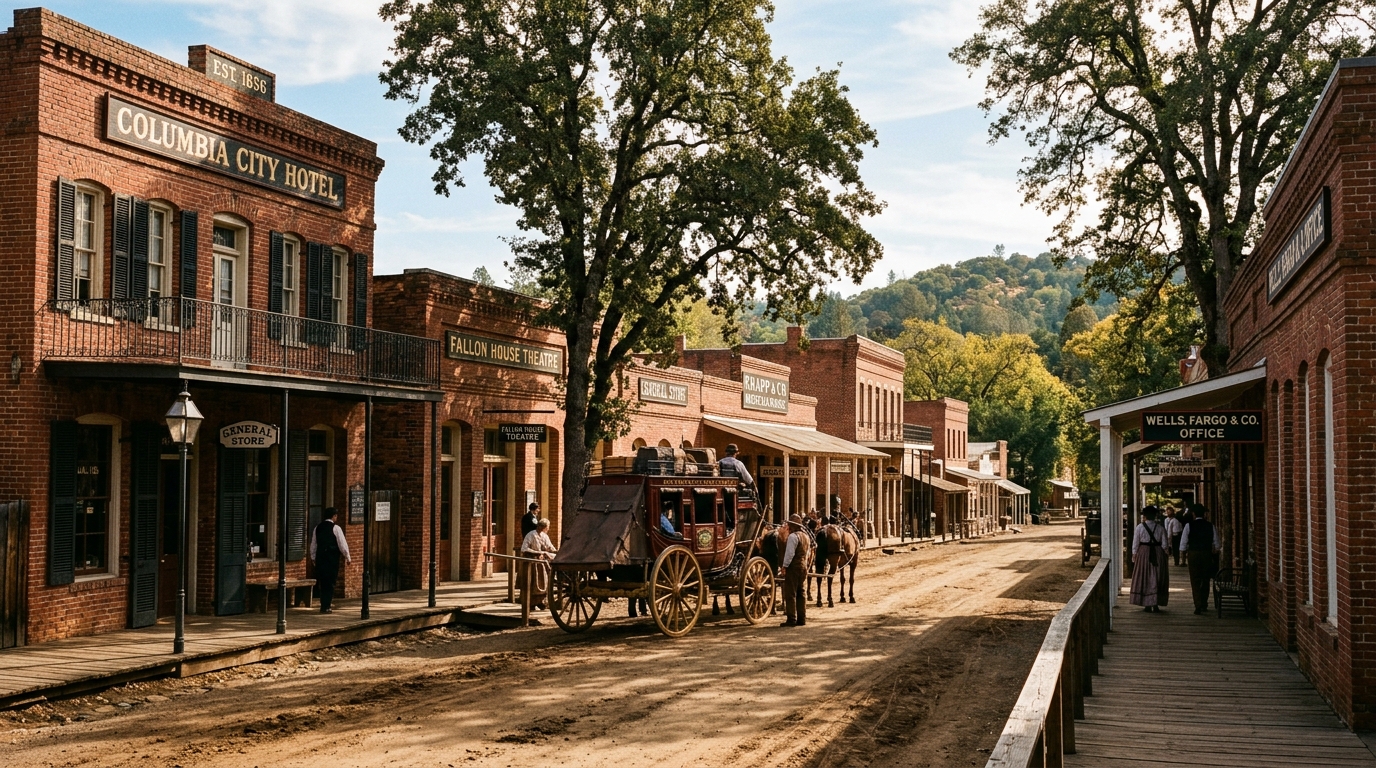
From Gulch Camp to the "Gem of the Southern Mines"
The story began on March 27, 1850, when a party of prospectors led by Dr. Thaddeus Hildreth got caught in a heavy rainstorm near what was then known as Hildreth's Diggins. While waiting for their blankets to dry, one of the men poked around the red clay of a nearby gulch and struck pay dirt. Within twenty-four hours, the secret was out. Within one month, more than 5,000 miners from around the globe had swarmed the drainage, hammering together makeshift canvas tents, timber shanties, and gaming tables.
Unlike river placer camps that washed away in winter floods, Columbia sat on a geological wonder: massive limestone bedrock riddled with crevices packed with rich, decomposed gold-bearing gravel. The only problem was water—or the total lack of it during blazing Sierra foothill summers. In an extraordinary feat of frontier civil engineering, miners constructed the Tuolumne County Water Company’s canal network, carving over sixty miles of wooden flumes and aqueducts from the high Sierra snowpack straight into Columbia.
With water flowing, the hydraulic monitors tore into the hillside with staggering pressure, washing away entire hillsides and leaving behind the surreal, ghostly fields of jagged white limestone boulders that still surround the town today.
Iron Shutters and Red Brick: How Columbia Survived When Others Burned
Virtually every Gold Rush camp in California burned down at least once. Columbia burned down twice—disastrous fires leveled the canvas-and-wood settlement in 1854 and again in 1857. But while other camps threw in the towel and evaporated into ghost towns, Columbia’s merchants were swimming in bullion. They decided to build for eternity.
Merchants imported brickmakers and erected heavy, locally fired red brick structures. To protect against future conflagrations, they hung thick iron shutters over every window and doorway. Those very same iron shutters and brick facades still line Main Street today.
By the 1940s, while neighboring boomtowns fell into rot or were bulldozed for suburban sprawl, Columbia’s residents fought to preserve their heritage. In 1945, the California State Legislature recognized the town’s unmatched architectural integrity and established Columbia State Historic Park, ensuring that its historic core would remain completely pedestrian-only, free from overhead electrical wires, neon signs, and automotive traffic.
Park admission is 100% free! For an authentic taste of 19th-century California, pop into Nelson's Columbia Candy Kitchen on Main Street. The same family has been making hand-pulled ribbon candy and chocolate fudge in antique copper kettles since the late 1800s. Grab an ice-cold root beer or sarsaparilla from the St. Charles Saloon afterward.
What to Explore: Living History in the 21st Century
Walking through Columbia today isn't a museum exercise behind velvet ropes—it’s an interactive journey through functioning 19th-century businesses:
- The Working Blacksmith Shop: Watch master smiths heat iron over coal forges, hammering out tools and horseshoe nails right before your eyes amid the rhythmic clang of the anvil.
- Gold Panning at Matelot Gulch: Learn how to read the swirl of black sand in a rustic pan and hunt for genuine gold flakes in the sluice boxes.
- The Stagecoach Run: Board an authentic wooden Wells Fargo-style stagecoach pulled by Belgian draft horses, rumbling through the town and winding through the limestone boulders.
- Papeete Engine Co. #1: Check out the legendary hand-pumped "Papeete" fire engine, built in Boston in 1852, originally bound for Tahiti, but rerouted to San Francisco and purchased by Columbia miners for a king’s ransom.
- The Historic Schoolhouse: Take a 5-minute stroll up the cemetery hill to visit California's oldest two-story brick schoolhouse, constructed in 1860 with two classrooms that educated foothill children until 1937.
Actionable Takeaways: Planning Your Foothills Trip
Columbia makes for a stellar day trip or weekend escape from Sacramento, the Bay Area, or Yosemite National Park:
- Hours & Fees: The park grounds are open 24/7 with zero admission fee and free public parking. Most living history merchants, saloons, and museum exhibits operate daily from 10:00 AM to 5:00 PM.
- Tours: Free docent-led walking tours depart daily at 11:00 AM from the museum between June and Labor Day, and on weekends throughout the rest of the year.
- Best Seasons: Autumn and spring are absolute perfection. Autumn brings crisp air and brilliant gold foliage from historic locust trees, while spring brings wildflower blooms among the limestone quarries. Summer can reach mid-90s, so plan outdoor walks for the morning hours.
- Where to Stay: You can actually book a room inside the park at the historic City Hotel or the Fallon Hotel, featuring antique Victorian furnishings and restored parlor rooms.


Comments
Post a Comment