Hiking the Historic Hardrock Trails of Empire Mine: Shafts, Stone Cottages, and Sierra Pine Forests
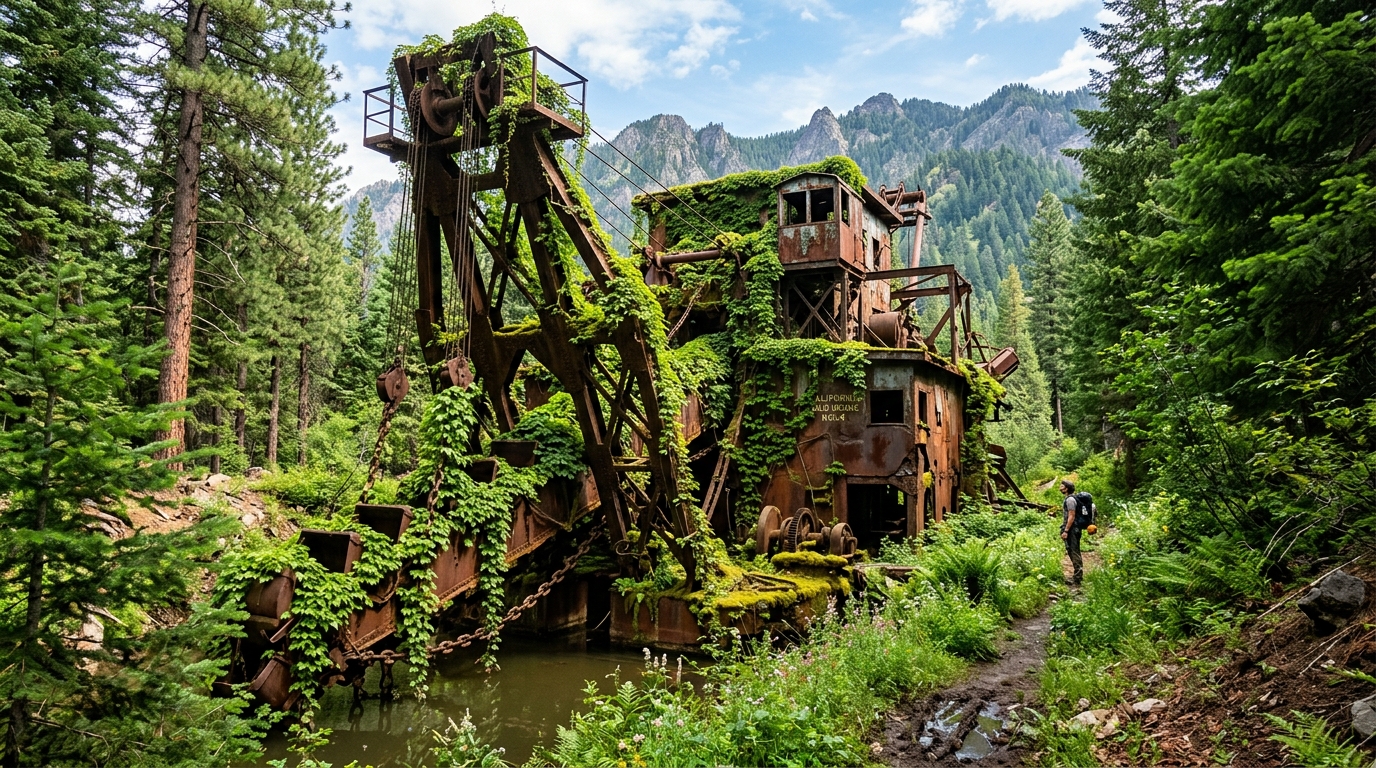
When most people imagine the California Gold Rush, their mind conjures images of flannel-clad prospectors swirling tin pans in sun-dappled Sierra streams. But the romantic era of easy surface gold was remarkably fleeting. By the early 1850s, the shallow placer gravels had been picked clean, forcing miners to pursue the Mother Lode into the subterranean darkness of solid granite and quartz. Nowhere was that brutal industrial transition more dramatic than Grass Valley.
Today, Empire Mine State Historic Park preserves 853 acres of pristine pine forests and rolling foothill ridges. Beneath your hiking boots lies an astonishing subterranean labyrinth: 367 miles of flooded tunnels plunging to an incline depth of over 11,000 feet. Spanning more than twenty miles of scenic backcountry trails, hiking Empire Mine is a rare opportunity to explore the intersection of pristine Sierra foothill ecology and the colossal engineering that extracted over 5.8 million ounces of gold.
The Hardrock Evolution: From Stream Gravel to Granite Vaults
The saga began in October 1850 when lumberman George Roberts literally tripped over an outcropping of gold-bearing white quartz on a hillside known as Ophir Hill. Unlike alluvial gold flakes washed clean by mountain runoff, this bullion was locked deep inside ancient geological vaults. Cracking it open required capital, heavy machinery, and specialized hardrock miners.
Grass Valley quickly became the adopted home of thousands of "Cousin Jacks"—expert hard-rock miners hailing from Cornwall, England. Facing economic collapse as tin and copper mines in Cornwall depleted, these miners brought generations of technical expertise to the California foothills. They pioneered the use of square-set timbering to shore up crumbling underground stopes and erected colossal steam-driven Cornish pumps to drain millions of gallons of frigid groundwater from the shafts daily.
Under the stewardship of financier William Bowers Bourn Jr., the Empire Mine expanded into an industrial titan. Operating almost continuously for 106 years until its closure in 1956, it earned the distinction of being the longest-running, deepest, and most productive hard-rock gold mine in North American history.
Park at the Penn Gate trailhead off Penn Valley Drive rather than the main visitor center lot if you're primarily visiting to hike or trail run. Parking here is completely free, bypasses the main museum admission kiosks, and connects immediately to the Osborne Hill and Hardrock trail loops under the shade of mature ponderosa pines.
The Essential Trail Network: Loops, Ruins, and Ridgelines
While the historic mineyard around the visitor center contains preserved machine shops and hoist houses, the park's true backcountry character reveals itself along its extensive trail network:
1. The Hardrock Trail Loop (2.5 Miles)
The crown jewel for day hikers and families, the Hardrock Trail is a gentle, multi-use interpretive loop winding through lush stands of ponderosa pine, incense cedar, and black oak. Dotted with weathered interpretive plaques, the trail guides you past massive concrete stamp-mill footings, iron tailing pipes, and the remnants of the historic mule corrals where pack animals rested after hauling timber into the shafts.
2. The Osborne Hill Loop (3.0 Miles)
For hikers seeking elevation gain and historic solitude, the Osborne Hill Trail climbs through chaparral and manzanita toward the eastern boundary of the park. At the summit, you'll encounter the eerie concrete ruins and safety gratings of the historic Osborne Hill Mine, surrounded by panoramic views across the Sierra Nevada ridgeline. In spring, native lupine, California poppies, and wild iris blanket the forest floor along the switchbacks.
3. The Union Hill and Little Wolf Creek Trails
Connecting to the northern sector of the park, these peaceful singletracks follow riparian corridors alongside Little Wolf Creek. The sound of running water, shaded canopies of Douglas fir, and moss-covered rock walls offer a cool respite during warm foothill summer afternoons.
Contrast of Two Worlds: The Cottage vs. The Mine Shaft
A trek through Empire Mine is an illuminating study in late-19th-century socioeconomic contrast. In the lower mineyard sits the mouth of the Empire Incline Shaft. Peer through the protective iron gate into the cold, damp void, and you can almost hear the deafening roar of pneumatic drills and the clank of iron ore skips plunging into the darkness where men labored ten-hour shifts in dripping, 100-degree cavern air.
A few hundred yards away, nestled within manicured formal gardens and reflective pools, stands Bourn Cottage. Designed in 1897 by renowned San Francisco architect Willis Polk, this two-story English manor was constructed entirely of rough-hewn waste rock pulled from the mine's own depths. Featuring leaded diamond-pane glass windows, redwood interiors, and imported European furnishings, it offered Bourn and his socialite circle an aristocratic retreat far removed from the grime of the stamp mills.
Visitor Logistics & Trailhead Guide
- Park Hours & Fees: Empire Mine State Historic Park is open daily from 9:00 AM to 5:00 PM (trails open sunrise to sunset). Day-use vehicle entry fee is $10 for the main historic core (or free with a California State Parks Poppy Pass).
- Trail Access: Trailheads are accessible from the main parking lot at 10791 E Empire St, or via free trailhead parking at Penn Gate and the Osborn Hill access points.
- Trail Etiquette: Multi-use trails are shared by hikers, trail runners, mountain bikers, and equestrians. Stay on marked paths; historic prospecting prospect pits and test shafts are fenced off for public safety.
10791 E Empire St, Grass Valley, CA 95945, USA
View on Google Maps ↗


Comments
Post a Comment