Bodie Ghost Town: Saloons, Gunfights, and Life Frozen in Arrested Decay
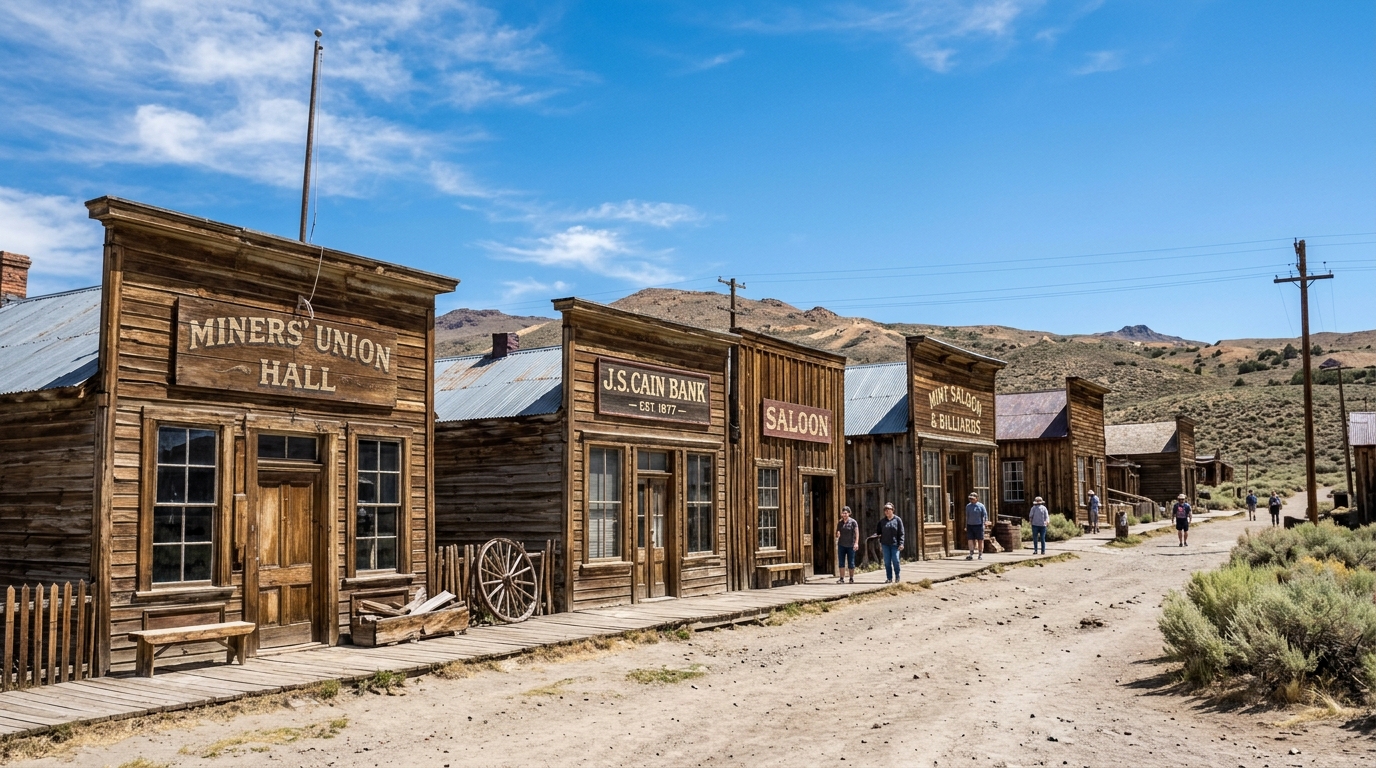
High in the windswept sagebrush plains of the Bodie Hills, east of the Sierra Nevada crest, stands the most authentic and haunting monument to California’s gold-seeking frenzy. At an elevation of 8,375 feet, where sub-zero blizzards howl for six months of the year and arid desert heat cracks timber in the summer, sits Bodie. Unlike manicured theme parks or tourist towns rebuilt with fresh lumber, Bodie is completely frozen in time. Over a hundred weathered wooden buildings—homes, saloons, schoolhouses, and the colossal Standard Consolidated Stamp Mill—lean against the mountain winds, their interiors still cluttered with dusty bottles, unmade iron beds, and faded wallpaper peeling from sagebrush walls.
Bodie is not merely abandoned; it is preserved by California State Parks in an extraordinary curatorial philosophy known as "arrested decay." Nothing is restored to look brand new, and nothing is allowed to collapse completely. Roofs are patched with vintage tin, foundations are subtly stabilized with stone jacks, but the haunting, raw patina of abandonment remains entirely intact.
The final three miles of State Route 270 leading into Bodie transition into an unpaved, notoriously washboarded dirt track. High-clearance vehicles are not strictly required in dry weather, but take it slow to avoid rattling your suspension. Once inside the park, peer closely through the glass windows of the Boone Store and the miner cabins—interior artifacts remain exactly where the last residents abandoned them in the 1940s. Strict state and federal laws prohibit pocketing even a single square iron nail or broken bottle shard from the grounds.
The Discovery and the Legend of the "Badman from Bodie"
The story began in the autumn of 1859 when prospector Waterman S. Bodey discovered placer gold in a rugged gulch northeast of Mono Lake. Bodey never lived to see the immense wealth his name would spawn; while packing supplies from Monoville in November of that same year, he was trapped in a furious mountain blizzard and froze to death on the ridge. The camp adopted his name, with the spelling modified to "Bodie" to ensure locals pronounced it properly.
For nearly two decades, Bodie remained a modest, struggling tent camp. That all changed violently in 1876 when a massive cave-in at the Bunker Hill mine exposed a colossal subterranean vein of rich gold and silver ore. The discovery triggered a frantic secondary Gold Rush. In a matter of eighteen months, miners, speculators, cardsharps, and dance-hall hostesses swarmed the plateau, ballooning the population from a few dozen prospectors to nearly 10,000 residents by 1879.
With instant riches came legendary frontier lawlessness. Bodie quickly earned an international reputation as one of the wildest, most violent boomtowns in the American West, immortalized by the grim archetype of the "Badman from Bodie." A popular 19th-century diary entry from a young girl moving to the camp famously read: "Goodbye God, I’m going to Bodie."
Saloons, Gunfights, and Frontier Survival
At its peak in 1880, Bodie supported more than 65 saloons along its bustling mile-long main thoroughfare, interspersed with gambling halls, brothels on Virgin Alley, and twenty-four-hour billiard parlors. Shootouts, barroom brawls, and stagecoach robberies were common occurrences. Funerals processed down the dirt road toward the town cemetery almost daily.
Yet behind the sensationalized gunfire was a thriving, complex Victorian community. Bodie had four volunteer fire companies, multiple daily newspapers, two banks, a brass band, fraternal lodges, and a substantial Chinatown that supplied the camp with firewood, laundry services, fresh vegetables, and goods transported across the harsh desert. Families raised children in clapboard cottages, and the Bodie schoolhouse rang its bell every morning for hundreds of students who walked past open mine shafts and rowdy miners to reach their desks.
The Stamp Mills and the Fires That Sealed Its Fate
Bodie’s heartbeat was industrial. Night and day, the earth trembled under the rhythmic, deafening thunder of the Standard Consolidated Stamp Mill, where heavy iron pestles crushed rock 24 hours a day to extract gleaming gold amalgam. Between 1860 and 1941, Bodie’s mines produced an estimated $34 million to $100 million in gold and silver bullion.
The boom, however, proved as fragile as pine shavings. By the mid-1880s, the richest surface veins had been depleted, and the larger mining syndicates began laying off underground crews. What human desertion started, fire finished. Wooden boomtowns in arid high-desert climates were tinderboxes. In 1892, a catastrophic blaze swept through the commercial district, destroying hundreds of structures.
The death blow arrived on June 23, 1932. A young boy playing with matches accidentally sparked a fire behind the downtown bank. Strong canyon winds whipped the flames into an inferno that incinerated nearly 90 percent of the town within hours. The residents whose homes survived packed what few belongings they could carry into trucks and automobiles, leaving the charred ruins behind. The post office finally shuttered in 1942, and the Cain family, who owned much of the property, hired armed caretakers to protect the town from scavengers until the State of California purchased the site in 1962 to establish Bodie State Historic Park.
Walking Through Arrested Decay: Key Sites to Explore
Today, visitors can wander through approximately 170 surviving historic structures spread across the open valley:
- The J.S. Cain Residence: One of the grandest preserved homes in town, featuring exquisite Victorian parlor furnishings, lace curtains, and glass display cabinets belonging to pioneer banker James S. Cain.
- The Boone Store: Peer through the front windows into an authentic 1880s general store, where dusty shelves remain lined with unpurchased coffee tins, vintage canned foods, ceramic jars, and ledger books.
- The Miners Union Hall: Now serving as the park museum and visitor center, this monumental two-story wooden hall was the social hub of Bodie's hard-rock labor union.
- The Standard Mill Complex: Perched on the eastern hill above town, this massive multi-level processing facility is accessible via docent-led tours and remains one of the finest surviving 19th-century stamp mills in North America.
- The Historic Cemetery: Set apart on a windswept hill outside town, the cemetery features separate sections for fraternal lodges, respected citizens, and the infamous "Boot Hill" where outlaws and suicide victims were buried outside consecrated ground.
Bodie State Historic Park Logistics & Essentials
- Location: Highway 270 (off US-395), Bridgeport, CA 93517 (Mono County).
- Park Hours: Open daily at 9:00 AM year-round; closing time varies seasonally (6:00 PM in summer; 4:00 PM in winter). Always check road conditions before visiting.
- Admission: $8 adults; $5 children (ages 4–17). Cash or credit cards accepted at the park entrance kiosk.
- Elevation & Weather: 8,375 feet above sea level. Sunscreen, hats, and abundant drinking water are mandatory in summer; heavy winter gear is essential in autumn and spring.
- Services: No food, fuel, or lodging is available in the park; restrooms and drinking water are located at the parking lot. Full amenities are available in nearby Bridgeport or Lee Vining.
Authoritative Regional Resources
To plan your journey to the high desert of the Eastern Sierra and learn more about Bodie’s preservation, consult these official organizations:
- California State Parks: Bodie State Historic Park – Official state portal with current weather advisories, road status, and park regulations.
- The Bodie Foundation – Non-profit organization dedicated to the historic preservation, stabilization, and interpretive tours of Bodie.
- Eastern Sierra Interpretive Association (ESIA) – Educational guides, historical monographs, and wilderness maps for the Eastern Sierra Nevada.


Comments
Post a Comment