Hiking the Historic Trails of Empire Mine: The Hardrock Trail, Penn Gate, and Osborne Hill
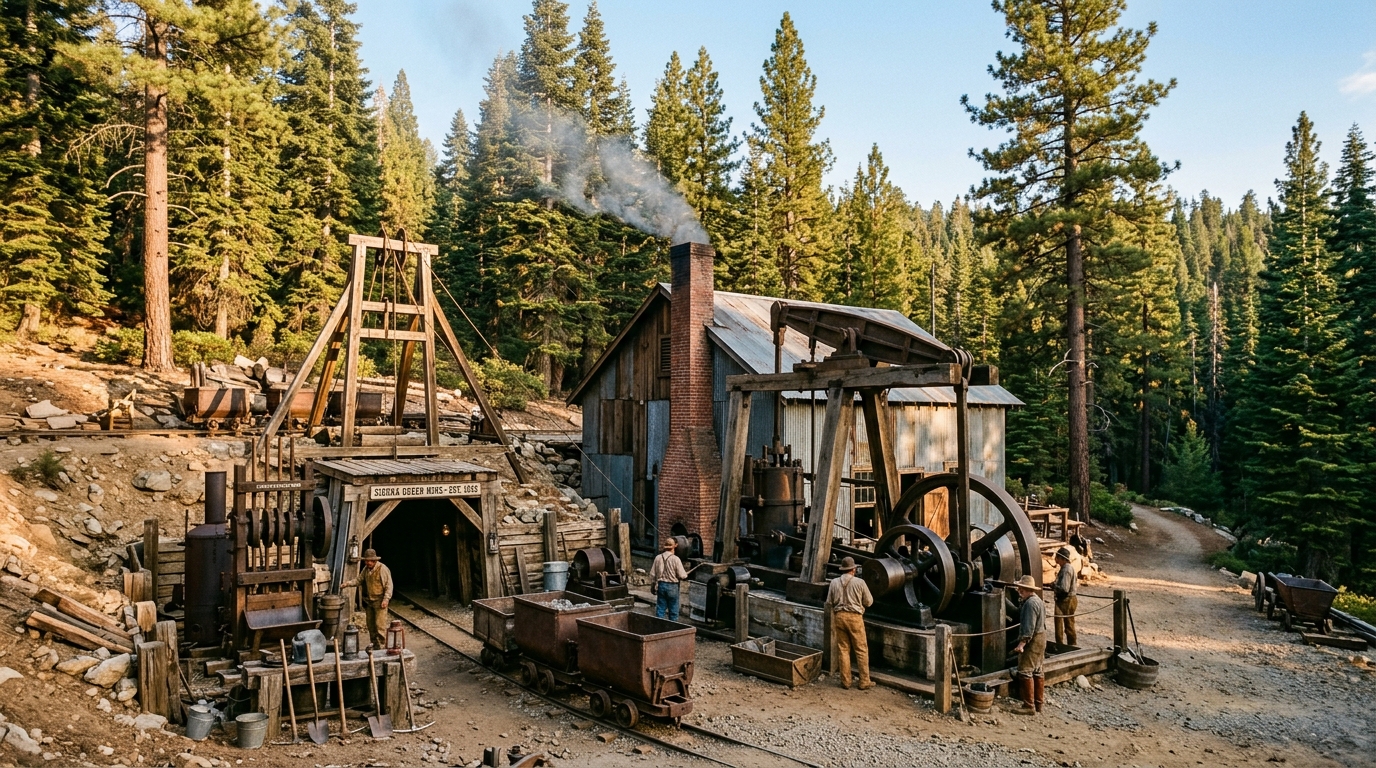
Most travelers who visit Empire Mine State Historic Park in Grass Valley spend an hour exploring the historic mineyard, peer down the dark, slanting entrance of the main shaft, and marvel at the manicured rose gardens of the Bourn Cottage before heading back to highway 49. But they miss more than eighty percent of the park. Spanning 853 acres of pristine Sierra Nevada foothill woodland, Empire Mine preserves a fourteen-mile backcountry trail network winding through dense stands of ponderosa pine, incense cedar, and black oak.
Hiking here is unlike any standard forest trek in Northern California. As you walk these winding singletracks and fire roads, the ground beneath your boots conceals an astonishing industrial ghost world: 367 miles of flooded, abandoned underground tunnels reaching over 11,000 feet along the quartz dip. Up on the sunlit surface, the trails loop past moss-draped stone foundations, rusted ore carts resting on forgotten narrow-gauge rails, massive waste-rock tailings, and sealed vertical shafts that once echoed with the clamor of Cornish hardrock miners.
Skip the crowded main park entrance parking lot on weekends and park instead at the Penn Gate Trailhead (located on Penn Gate Road off Empire Street). Parking at Penn Gate provides direct, free trail access into the backcountry network without paying the historic cottage admission fee. Trails are multi-use—watch for equestrians on blind bends, yield to uphill hikers, and keep a sharp eye out for poison oak along the creek washes.
The Hardrock Trail: A 2.5-Mile Masterclass in Mining Archaeology
If you have time for only one hike in the park, the Hardrock Trail is the undisputed crown jewel. Beginning near the park’s main visitor center and winding southward through a vibrant forest of cedar and manzanita, this 2.5-mile loop is an open-air museum designed in partnership with mining historians.
Numbered interpretive markers lead hikers through a fascinating progression of industrial ruins:
- The Stamp Mill Foundations: Massive tiered granite and concrete terraces where batteries of 1,000-pound iron stamps pounded auriferous quartz into fine slurry twenty-four hours a day.
- The Cyanide Plant Ruins: The skeletal concrete tanks where chemical leaching extracted microscopic gold particles that mechanical mercury amalgamation missed.
- The Narrow-Gauge Rail Cuts: Sunken railbeds where mule-drawn and compressed-air locomotives hauled thousands of tons of ore from outlying shafts to the central mill.
- The Northstar Mine Incline: Stone portals where ventilation blowers and electrical conduits entered the subterranean labyrinths.
The trail offers gentle elevation changes, making it accessible for families and leashed dogs, with ample wooden benches positioned beneath shady pines for quiet reflection.
Osborne Hill: Conquering the Backcountry Ridge
For hikers seeking greater elevation gain, solitude, and sweeping views of the Sierra foothills, the Osborne Hill Trail offers a rewarding 3.5-mile loop through the park’s rugged southern backcountry. Climbing steadily through mixed conifer forest, the trail gains several hundred feet of elevation as it ascends the spine of Osborne Hill.
Historically, Osborne Hill was the site of several competing independent mining claims that were eventually consolidated into the Empire empire during the late 19th century. Along the crest of the ridge, hikers encounter:
- Rusted Machinery and Boilers: Colossal iron steam boilers and hoist drums, slowly being reclaimed by forest moss and manzanita shrubs.
- Stone Cabin Hearths: The chimney ruins of 1860s miners' cabins, offering a quiet glimpse into the rugged lives of the Cornish ("Cousin Jack") and Irish miners who lived on the claims.
- The Ridge Overlook: Clear days provide panoramic views looking east toward the snow-capped crest of the High Sierra, framed by towering sugar pines.
The Union Hill & South Fork Loops
On the park's eastern perimeter, trails like the Union Hill Trail and the Little Kate Trail wander along peaceful seasonal creek beds and old water-ditch corridors. Water was the lifeblood of foothill mining, powering compressors, Pelton wheels, and cooling systems. These gentle contour paths follow the earthen ditches engineered by 19th-century ditch-tenders to channel water from the South Yuba River watershed directly into the mineyards.
Springtime (March through May) transforms these riparian corridors into wildflower showcases, featuring vibrant blooms of western redbud, lupine, California poppies, and delicate fairy lanterns. In autumn, the black oaks turn brilliant amber and gold, carpeting the singletracks in crisp leaves.
From Industrial Grime to Victorian Luxury: The Bourn Cottage Gardens
After completing your backcountry loop, transition from the wilderness to one of the most unexpected architectural gems in the Sierra foothills: the Bourn Cottage. Built in 1897 for mine owner William Bowers Bourn Jr., this country estate was designed by celebrated San Francisco architect Willis Polk (who also designed Filoli in Woodside).
Constructed from rough-hewn stone tailings quarried directly from the mine's subterranean shafts, the cottage evokes an English manor house, featuring diamond-paned leaded glass windows, hand-carved redwood beams, and sweeping stone fireplaces. Surrounding the cottage are thirteen acres of formal English landscape gardens, showcasing over a hundred varieties of heritage climbing roses, immaculate boxwood parterres, and reflecting pools. The sharp contrast between the gritty, grease-stained timber headframe yards and Bourn's tranquil aristocratic gardens captures the extraordinary social hierarchy of the California Gold Rush era.
Empire Mine Trail Logistics & Essentials
- Location: 10791 E. Empire Street, Grass Valley, CA 95945 (Nevada County).
- Park Hours: Historic grounds open daily 10:00 AM to 5:00 PM. Backcountry trails open sunrise to sunset.
- Trail Access & Fees: Backcountry trails accessible via Penn Gate Trailhead with free parking; historic mineyard and cottage area requires standard park admission ($8 adults, $4 kids).
- Trail Activities: Hiking, trail running, mountain biking, and horseback riding permitted on designated multi-use trails; dogs permitted on 6-foot leashes on backcountry trails.
- Safety: Stay strictly on marked trails; historic mine shafts are fenced and grated for safety, but unmapped prospects exist in the backcountry brush.
Authoritative Regional Trail Resources
To view detailed topographical trail maps, seasonal interpretive hikes, and local trail stewardship projects in Nevada County, consult these official portals:
- California State Parks: Empire Mine State Historic Park – Official park portal, brochure downloads, docent cottage tour schedules, and event calendars.
- Empire Mine Park Association – Dedicated volunteer non-profit operating living history events, historic garden preservation, and trail maintenance.
- Bear Yuba Land Trust (BYLT) – Regional conservation land trust providing comprehensive trail maps and recreation guides across Nevada County.


Comments
Post a Comment